+91-9830330809 / +91-9830050132

Here’s The Power of Multi-Format Publication: Thriving and Surviving in a Dynamic Marketplace

In this dynamic publishing marketplace, visibility is the most important currency and this visibility can be in any shape and form, but it will still be valuable.

We are talking about everything from readers to listeners and viewers, subscribers and followers and everything else.

In this landscape, authors must understand the power of multi-format publication and understand that this is the most powerful strategy that helps you blend your content across multiple environments and different means, such as text and video, as well as audio.

That is why today we are going to talk about the power of multi-format publication and understand how you can not only survive in this dynamic marketplace with different forms of publication but also thrive in it.

In order to understand the power of multiformat publication, we are first going to understand what multi-format publication is and then move on to why the marketplace demands multi-format publication and ultimately understand the strategic advantages of multiformat publishing.

So, let’s start with understanding what is multi-format publication.

What is Multi-Format Publication?
Multi-Format Publication

In order to understand multi-format publication, we need to understand what is a single-format or traditional publication. Single-format publication is basically utilising a single format to publish your content, which has always been traditionally in the form of physical books.

That is why multi-format publication is when you utilise multiple formats for publishing your content and distributing content.

This can be in formats such as videos and audio books, as well as eBooks and blogs and even podcasts and much more.

The entire concept of multi-format publication is to utilise as many means of publication as possible in order to improve the visibility of your content and it is basically what content diversification means.

The advantage of multi-format publication is that it can be recycled multiple times. For instance, you can utilise YouTube and create YouTube videos about your physical book that you publish and you can then publish the audio from that YouTube video as a podcast and in that podcast, you can also promote your audiobook version of your book.

Why the Marketplace Demands It

Multi-Format Publication

Algorithms Reward Variety

This is the age of algorithms and this is the age of social media and search engines prioritise fresh and engaging content in multiple forms and in this day and age if you have a book and a blog as well as a video and audiobook about it then it is going to have a much more powerful impact then as simple book and its listing on a website.

If you want relevance and authority online and more visibility, then you need to understand how algorithms reward.

Consumer Behaviour Is Evolving

One of the primary reasons why multiformat content exists in the first place is because of consumer demand, as consumer behaviour is evolving as we speak, people are looking for convenience and choices.

A modern book reader will not just look for a book but also details of that book in a blog and perhaps an audiobook regarding that book they can listen to when they are driving or even a video on the topic of the book they can look into later on.

If you want the market to reward you, then you need to understand what the market wants.

Attention Is Fragmented

If you think of attention as real estate, then this real estate has been fragmented into multiple sections and the average person’s attention span, therefore, has been distributed evenly across multiple formats. That is why if you focus on multiformat content, you will increase the odds of reaching your audience.

The Strategic Advantages of Multi-Format Publishing
Multi-Format Publication

Extended Content Lifespan

The greatest advantage multi-format publishing brings to the table is the option of recycling content. This means that if you are an author with a book, you can create multiple other forms of content from that book.

You can perhaps start a podcast about your journey of writing the book and you can even create videos about the writing process or the content of the book and even create detailed blogs on certain topics from that book.

Additionally, you can directly convert your book into an audiobook or eBook and that way, you are simply extending the content lifespan by making sure the same content is repurposed multiple times and that it has much more exposure out in the open.

Enhanced Brand Authority

Visibility is ultimately brand authority and if you want to establish your brand as an author, then it is always a good option to have multiple forms of content scattered strategically across different mediums.

This means that you are going to get many more eyeballs if there are multiple blogs about your book that come up on a search for your book. Additionally, it also helps if your book is available as an audiobook or an eBook as well.

Greater Accessibility

One of the best positive side effects of multi-format publishing is that it improves the accessibility of your content by a lot. Not everyone will read your entire book from a physical copy because they simply might not have the time to do so; however, if you create an audiobook of the same book, then they might be able to listen to it while they are driving or cooking or doing something else. Having your content published in multiple formats will only make it more accessible to people, including people with different abilities.

Increased ROI on Creative Effort

Multi-format publishing will ultimately give you better ROI on your content and it is a very practical decision from an economic standpoint.

This is simply because when you are repurposing content across formats, you are not having to put in the same amount of effort to create original content every single time.

This means that when you go for multi-format publishing, your ROIs improve dramatically, improving your return on time and creativity as well as investment, making it a smart marketing decision where you create once but publish it multiple times, less effort, more reward.

We hope this blog has been helpful for you to understand the importance of multi-format publishing and the kind of power and impact it can have for an author.

If you are an author looking to try out multi-format publishing in the form of different formats of publishing, like audiobooks and eBooks, along with traditional paperback publishing, we are here to help you.

We are Orange Publishers and we are a legacy publishing company that brings you the convenience of self-publishing with the reliability of traditional publishing all under a single roof. We would love to help you with your multi-format publishing plans.

We publish everything from traditional hard covers as well as paperbacks and along with that, we also do audiobook and ebook publishing as well.

We welcome you to visit our website and check out everything we do.


5 Signs You’re Ready to Publish Your Book

Publishing a book can be considered as one of the single most important elements and aspirations in the life of any author.

That is why if you are an author and if you have decided that you have reached the moment of publishing your book, first we would like to congratulate you and second, we would like to help you out with the process.

However, if you are someone who has completed a manuscript and you are still not sure whether you are ready to publish, then this blog is for you.

Today we dedicate this blog to all those writers who might not be completely sure of the fact whether they should publish and we are here to help them with 5 important signs that show that you are ready to publish your book.

But before with me that we need to understand what did means to be ready to publish your book, because being ready can mean a lot of things and it can be being financially ready or emotionally ready, so let’s start with that and then let’s look at the five signs that indicate publish readiness.

What It Really Means to Be Ready to Publish Your Book

Publish Your Book

What it really means to be ready to publish your book is not the point of simply having a manuscript and having it edited and ready for publishing.

Being ready for publishing is when you are emotionally and structurally, as well as financially, ready for publishing that book.

This is because when you are trying to get your book published traditionally, you will have to be emotionally resilient because you might face a lot of rejections.

If you want to publish your book, you need to have the manuscript structurally ready and when you are doing all of that and moving from door to door from one publisher to another, you need to be financially ready to sustain yourself.

Being ready ultimately means to believe in your story and to do your level best in editing it and making sure it is ready for publishing and to try out every door in order to get published.

However, that is still very vague and that is why we are going to tell you the 5 signs that will actually convince you that you are ready to publish your book and these are some signs that you should look out for as an author.

5 Signs You’re Ready to Publish Your Book

Publish Your Book

You’ve Revised Beyond the Surface

Your very first sign should be the fact that you have done your level best when it comes to making sure the manuscript is perfect and beyond perfect.

This means that you have gone as far as possible in fixing grammatical mistakes and refining your story’s structure and pacing, and everything else.

It also means that you have done the hard work necessary for rewriting scenes you did not like and for making sure the flow of the story is exactly how you want it to be and that is when you are ready to publish.

You’ve Received Constructive (and Positive) Feedback

Since you are the creator of your manuscript, you might not be the best person when it comes to understanding how good it is and that is why you need criticism and feedback on your manuscript.

If you are finished with editing the manuscript and you have shown it to your friends and family and people who understand the craft and they have genuinely appreciated the work and have been honest with you, it might be a good indication that you are now ready to publish your book.

You must understand that it is very important that you ask your friends and family and the people reading your manuscript to be honest about their criticism.

You Know Your Publishing Path

Being ready for publishing is all about clarity and one of the most important aspects of this clarity comes from clarity of knowing how to publish your book.

In this day and age, you will have different options when it comes to publishing your book because there’s the traditional option of traditional publishing and then there is the option of self-publishing your book.

Both of these two options have their positive and negatives because if you go for the traditional option, you might have to wait a long time and if you go for self-publishing, then you might have to produce the book with your own finances.

That is why if you are clear on which option to choose, you are ready for publishing.

You’re Emotionally Ready to Let Go

Non-authors might not get this but letting go of your work and not acting on the urge to change things about it might be one of the most difficult decisions ever for any author.

Every author out there always has to make amends with the feeling that they have to stop editing the manuscript at some point.

If you are finally ready to do that and if you are finally satisfied with what you have created and you no longer want to edit it and you want to send it out into the world, then this is the strongest sign ever.

However, saying this is easy but doing it is hard because every author out there wants to create the most perfect book possible and they want to write one that is better than anything else they have ever created.

But to finally stop that journey and to simply publish it is difficult.

You Understand Your Audience and Market

An author should not only be the person who is an expert at what they are writing but they should also equally be an expert at understanding the market and audience.

You must understand that when an author is publishing a book, it is a financial decision for them because they are a professional and ultimately will need their book to sell.

It is not just about praises and fan mail because it is about actual action and actual success in book stores.

That is why if you have done extensive research about your audience and you have created something that people will actually buy, then you are definitely ready to publish your book.

We hope this blog has been helpful for you to understand the 5 important signs that will indicate that you are ready to publish your book.

And if you are an author who has identified these signs and you are finally ready to publish your book, we are here for you.

We are Orange Publishers and we are one of the most renowned names in the publishing industry. We are a legacy publishing company that brings you the best of traditional publishing and self-publishing, all under a single roof.

We have extensive experience in publishing from nearly every popular genre out there and we would love to accommodate your manuscript and help you with a comprehensive and seamless publishing experience.

We welcome you to visit our website and check out everything we do.


The Emotional Depth AI Can’t Replicate in Literature – Why Authors Matter

AI is everywhere, from your banking to your classrooms and your entertainment and beyond and the world is continuously being shaped by AI as we speak, and a lot of that includes content creation and generation, including art and stories.

However, there is a drawback to this because there is something that is simply impossible and irreplaceable when it comes to content creation.

We are, of course, talking about emotional depth, the kind of depth that is only possible by living the human experience.

This is the kind of depth that cannot be authentically lived and experienced by AI and it might only be replicated or copied without authenticity by AI.

You can think of it like smell or taste, you can look at pictures of flowers and you can read about the smell of flowers, but in order to truly understand it, you will need to experience it or at least listen to the person who has experienced it firsthand.

That is exactly what emotional depth is from the standpoint of the human experience and this is where authors matter even more in this world full of AI content.

So, today we are going to understand what is emotional depth in literature and why authors matter, as we will understand the reasons why AI can’t replicate emotional depth in literature.

Let’s start by understanding what is emotional depth.

What Is Emotional Depth in Literature?

Emotional Depth in Literature

The simplest way to understand emotional depth in literature is the portrayal of human experience in the form of human emotions that evoke empathy and introspection, as well as connection and relatability in readers.

Emotional depth is that layer of writing that works as invisible glue when it comes to the written matter in a book and the reader, as this is that important element that makes the reader feel a connection with the writing.

This kind of connection is just not possible without actually living the human experience and without understanding what it means to be a human.

When we say a book has emotional depth, we mean that this book is successful in showcasing the following:

Authentic Human Experience

This is when the author draws from actual emotions and actual memories and dreams and actual experiences and imparts that into the writing.

Subtext and Nuance

Subtext and nuance are the indelible ingredients responsible for achieving emotional depth that helps the author reveal emotion through silence and gesture, as well as metaphors, something that AI is still not capable of doing authentically without copying something else.

Empathy and Perspective

You can only write about something if you have felt that something and that is exactly what authors do, which is to draw from their human experience and journalise that understanding into their writing. That is what creates empathy.

Emotional Growth

Authentic human-written literature is transformative and responsible for emotional growth and it does this through joy and pain and love and loss and important elements of human identity and if a book needs to have emotional depth, then this aspect of emotional growth is a must.

Reasons Why AI Can’t Replicate Emotional Depth in Literature

AI Can’t Replicate Emotional Depth in Literature

AI Lacks Lived Experience

One of the biggest drawbacks, or rather crippling disadvantages of AI in this regard of emotional depth is that it is not a life, it has not lived a life as a human and it does not feel sorrow or love or longing the same way a human does. That is exactly why it is simply not capable of genuine emotional memory or experiences.

The most it can do is emulate this portrail or feeling from existing content that has been fed to it during its training. Readers do not appreciate that.

Absence of Empathy and Intent

Sympathy is when you might or might not understand what the person is going through but you feel bad for that person. Empathy is something more powerful and it is when you can connect and actually feel what another person is feeling.

This is something very basic but very important to the human experience.

It might be possible for some super intelligence to feel sympathy, but it is practically impossible for that super intelligence or AI to feel empathy because it can never be a human and relate and empathise with another person and that is why content created by AI will simply not be the same as content created by a human author that has lived the human experience.

Emotional Context vs. Data Patterns

AI is good with data, it is good with patterns and sophisticated statistics and concrete contextual data that it can do something with. Basically, AI is not very good with anything abstract, such as emotion and happiness or grief.

Humans are excellent with emotion because emotional context, such as cultural background and personal history, as well as psychological nuance, is a very intrinsic part of the human experience and this is where a human author is going to be unchallenged when it comes to emotional context.

Subtlety and Imperfection

The beauty of humanity and being a human is unintentional randomness, which is sometimes also called imperfection. It is quite difficult for us to create something without imperfections, which means that whenever a human creates something, it is unintentionally unique and has subtle flaws in it.

AI is perfect, which is good for physics and maths and science as well as data and statistics.  Perfection is not good for literature because good literature is only created when something has not taken place in the most perfect sense and there is conflict and that you why human-written literature will always be superior to AI in literature.

Moral and Existential Understanding

The biggest drawback of technology like AI is the fact that it does not have moral or existential understanding or what we like to call consciousness.

Literature is something that needs morality because literature shapes society but if you remove that element from it, things can actually get dangerous, because then we would be navigating philosophical terrains without any guardrail of morality.

This is simply to say that you would only want something as powerful as literature to be written by someone who understands good and bad.

Authors, therefore, will always matter when it comes to literature because this is an area where AI simply is not relevant.

If you are an author and you are planning on publishing your masterpiece with a legacy publishing company, we are here for you.

We are Orange Publishers and we are one of the most reliable names in the entire publishing industry.  We are a legacy publishing company that brings you the reliability of traditional publishing with the convenience of self-publishing All under a single name and we can assure you that we do not use AI at any step of the process when it comes to publishing your masterpiece.

We welcome you to visit our website and check out everything we do.
Why Publishing Is Still the Backbone of Cultural Conversation

We are at this moment of time in history when information is abundant and you do not really need to pick up a book for information.

Today, you can simply pull out your smartphone and do a quick Google search to find out things and you can ask AI for things that Google will not help with.

In a world like this, the relevance of publishing is quite an important question that we all need to ask.

Do we really need publishing in this digital, fast-paced world or does publishing still matter?

We are going to find out the answer to this very important question in this blog and furthermore understand why publishing is even more important in this day and age and how publishing is still the backbone of cultural conversation.

So, let us get straight into it and understand why publishing matters more than ever and why authors are going to play one of the most important roles in society when it comes to starting important conversations related to culture.

This Is Why Publishing Is Still the Backbone of Cultural Conversation

Book Publishing

Publishing Anchors Ideas

In today’s day and age, you are going to find millions of social media posts achieving virality and getting a lot of praise and likes and shares, but simply visit those same posts after a year and you will find that nobody is talking about those ideas.

Social media has made ideas much more temporary but there is something that, if good, only rises in relevance throughout the years and we are talking about published works.

Published books are timeless and they become important reference points so that people return to them again and again.

This can be quite rarely said about any social media post.

Publishing Brings Authority

Anyone has the ability to post online and if you spend enough money, then you can even promote those posts online and it is just a matter of how much you want to spend, because you can rack up thousands of followers within a matter of days if you have a big enough pocket.

However, followers do not equal authority simply because authority can only be established in a place that is hard to reach.

That is why if you do the same thing as everyone and post online and promote those posts, then you might get followers but it will not be equal to authority.

Publishing a book is completely different from that because when you publish something, it is itself a sign of credibility, because not everyone can go out there and publish a book, because they will actually have to write it and organise it.

That is why published works have far more influence in society than something that can be done by everyone.

Publishing Connects Cultures

Social media might be a conversation starter but there is no depth in the information provided through social media. If you want to understand a culture through social media, then there is a high likelihood that you are also going to be exposed to stereotypes and ill-informed views.

However, if you truly want to understand a culture, then there is no better way to do that than picking up a published book or novel or even an essay about that culture.

For instance, if you want to understand the culture and society of Ireland at a particular time in history, then Ulysses is a great reflection of that.

Similarly, One Hundred Years of Solitude would be a great reflection of Latin American society and history, as well as the family and politics of that society.

Likewise, Fyodor Dostoevsky’s The Brothers Karamazov would be a very accurate reflection of religion and philosophy as well as societal change in Tsarist Russia.

Social media or any other form of media is just not capable of capturing this level of depth and nuance that a book can.

Publishing Extends Your Reach

If you are looking for something a little bit more permanent and a little bit more worthwhile, books can be the only alternative for you.

This is simply due to the fact that social media posts are only relevant for a very short period of time and then they fade away and get replaced by more recent content.

This is one of the downsides of social media and it is the fact that tweets and posts, no matter how beautifully created, do not last and sometimes they just become a set of binary numbers on a corner of a server.

Books, on the other hand, are permanent. No matter how many books are published after your book or before your book, your book will stay preserved and relevant the moment you publish it.

It will be an important reflection of the topic you have decided to write on and it will be a point of reference for scholars and readers looking to understand society during the time of your choosing.

The fun part about book publishing is that sometimes books can become even more popular many years after they have been published but you simply cannot say that for social media.

Publishing Creates Legacy

If you want to create something permanent in the form of your legacy that you can pass down to your children and grandchildren and your subordinates and juniors, you might not choose to share some social media post links.

However, books are perfectly suitable for this task because books are permanent and published works say only one thing, which is that you are serious about putting out something into the world that deserves looking at.

Publishing something means you want the world to also understand your ideas and it stops being something about yourself and ultimately takes on the bigger role of being something for everyone.

This universal stage can only be created once you have published something where your words become much more than just some fleeting ideas.

We hope this blog has helped you understand why publishing is still the backbone of cultural conversations and why publishing is the only way to preserve important conversations related to society and culture.

If you are among the very few talented people who believe in writing books and contributing to this important cultural conversation and wish to put them out into the world, we are here for you.

We are Orange Publishers and we are a legacy publishing company that brings you the convenience of self-publishing with the reliability of traditional publishing, so that you get to publish all your important manuscripts into books without any hassle.

We have extensive experience in publishing fiction and nonfiction and every other genre and type of book and we would love to help publish your books as well.

We welcome you to visit our website and check out everything we do.
Here’s How to Create a Back-Cover Blurb That Sells – Let’s Find Out

If you think about it carefully, then your entire book can be utilised as a powerful marketing tool that can ultimately help with the buying message to your readers.

Your entire book cover can be a marketing tool, and the back cover can also be a very powerful marketing tool; and we would argue that it is even more powerful than the front cover.

That is exactly why today we are going to tell you how to create a back cover blurb that will actually help sell your book.

We are going to talk about all the important things that your back cover blurb should contain for your book to actually perform well when it comes to sales.

But before we can do that, we need to understand what is a back-cover blurb of a book so that we can move on to understand why this is such important marketing real estate for a book and also how to create the best one.

So, let’s begin.

What Is a Back-Cover Blurb?

Back-Cover Blurb

A back-cover blurb is perhaps one of the most ingenious marketing tools out there and it is usually printed on the back cover of the book.

However, it should not be confused with the synopsis of the book because it is not a summary of the book but instead it is a very short description that is primarily there to spark curiosity and make the users buy the book.

You can think of it as a sample of the book in order to give a quick taste regarding the tone and the premise of the book and it is basically there to convince people to read the actual book.

If we have to explain this in movie terminology, then it would be comparable to a movie trailer or a teaser, which is short and engaging and is just there to spark curiosity without giving away the story.

Writing a book blurb can definitely be considered a very unique skill, and it matters because it presents the very first impressions about the book and is one of the most essential hooks that sets expectations for the readers.

Key Ingredients of a Blurb That Sells

Key Ingredients of a Blurb

Start With a Hook

The very first thing you can do to create a good blurb that sells is to start the very first sentence with a hook that will make the readers stop on their tracks and continue reading.

In order to do that, you can start the first sentence with a question or even drop a very shocking fact or tell something that is quite emotional and will make the readers stop and think.

This is one of the most necessary things you must keep in mind when you are planning the hook and this is not really optional because if you want a blurb that actually sells and performs well, then this shock and awe factor should always be present.

Introduce Your Protagonist Quickly

There are many reasons why people might fall in love with a book and one of the primary reasons has to do with the protagonist and that is exactly what you have to do with the blurb.

When you are starting the blurb, you should not waste any time in introducing the protagonist so that the reader instantly has someone to connect with and you should do that in a way that gives away just enough detail to start interest in the protagonist.

You must put in details and highlight things that are going to make the character unique and if you decide not to make the character unique, then you must at least decide to make the character relatable.

However, then again, you must keep it tight and not reveal too much and perhaps maybe just put in the name of the protagonist and the role they are actually playing in the story.

Present the Conflict (Without Spoiling the Plot)

After you start with the hook and introduce the protagonist, it is now time to sprinkle a little bit of spice and flavour into the blurb.

This can only be done by presenting the conflict in a way that showcases the actual engine that drives the story.

However, this is an area that you must be extremely careful with because you simply cannot risk revealing the actual conflict, the climax or any crucial detail.

Instead, you can do something like talk about what is at stake for the character and what kind of things the character might lose in case things go in the wrong direction.

In addition to that, you must also try to present the environment of the conflict and hint at all the forces that are working against the protagonist.

But then again, you must be very careful in this stage of the blurb because if you reveal too much, then there will be no reason for the reader to get the book.

Match the Tone to Your Genre

Matching the tone of the blurb to the actual genre and the story is quite important because a blurb, in its basic form, is a small sample of the entire book.

You can think of it like a food sample, where if the sample is not similar to the actual dish, then the consumers will be disappointed. Similarly, the blurb must feel exactly like the book but it should just stop before it reveals too much.

That is why you must place special focus on the genre of book you are writing when you are creating the blurb, because if the book is a thriller, then the blurb has to be full of urgent sentences, and it should have a fast pace to it, and if it is romance, then the blurb has to be emotional and dramatic, etc.

End With a Tease or a Call-to-Action

Now that you know everything that you must put into the blurb, it is also important to understand how you should end it because you should end it with a tease or something that makes the readers want more.

The primary purpose of a blurb is that it is a teaser that will make the readers want to invest their time in the story and that is why you should end it with a mystery and invite them into the story so that they actually get the book.

Avoid

It is also quite important to understand the things you should avoid and the very first thing you need to understand is that this is a teaser, and you should totally avoid dumping too much information into the blurb. If you do that, you will ruin the book.

You must also try avoiding clichés that readers have read a thousand times and you must also keep the length short and finally avoid spoilers.

We hope this blog has helped you understand how to create the perfect back-cover blurb that helps you sell your book.

And if you have decided on the back-cover blurb after completing the manuscript and are looking for one of the most reliable and reputed names in the industry when it comes to publishing, then we are here for you.

We are Orange Publishers and we are a legacy publishing company that presents you with the reliability of traditional publishing combined with the convenience of self-publishing all under a single name.

We have extensive publishing experience with different media and genres and we would love to publish your very own book, complete with a powerful back-cover blurb.

We welcome you to visit our website for more details.

Reasons Why Word-of-Mouth Is Still the Best Marketing Tool for Books

The world of marketing and digital ads is like the Amazon forest of variety, where you have all kinds, with some more effective than others.

You have digital ads that can be quite expensive and you have influencer campaigns. Along with that, if you want to use technology, then you have complicated algorithms to utilise for the best results in generating content and curating and sending out content to the right people.

Additionally, you have traditional marketing strategies out there as well that might help you market your book to the right audience.

However, the book market is completely different from the rest of the sales industry as a whole because books are one of the most unique kinds of products out there that do not function the same way as any other product, like a gadget or a commodity.

That is why today we are going to talk about one of the most organic and one of the most powerful and traditional marketing tools out there for books that might not even be as effective for any other product in this day and age.

We are, of course, talking about word-of-mouth marketing. Today, we are going to understand why word-of-mouth marketing is one of the most powerful forms of marketing out there and why the book industry is different from every other industry in this regard.

So, let’s get right into it.

Why Word-of-Mouth Outshines Every Other Marketing Strategy for Books

Marketing Strategy for Books

Trust Trumps Advertising

One of the biggest drawbacks of any form of marketing is that the moment you reveal the fact that it is marketing, it will draw scepticism from the audience.

This simply means that marketing itself is by nature not organic and that is why everything you say in a marketing campaign is by nature supposed to sound good and you can claim anything in a marketing campaign and the audience knows that.

That is why the most genuine praise of a book in an ad is still going to be artificial.

Compare that to word-of-mouth marketing and it is a completely different situation because in this case, the potential customer is hearing good things about a book from someone they already trust.

The trust factor is very high with this kind of marketing because references like this usually come from friends or family members or even from trusted people of a book club, which increases the likelihood of the person getting the book.

Books Are a Personal Experience

Books are not like a box of matches or a vacuum cleaner that is just there to serve a purpose, because books are beyond a purpose, as they are more of a personal experience for a person.

With other products, you can express how something can be quite helpful for a person, for instance, you can say that this pen really writes well or this cycle rides well.

You cannot do that for books and say this book reads very well. Books are all about emotions and it is about an emotional connection which can only be shared by another person who has felt that connection and not the author or the publisher themselves.

This kind of sharing of a personal experience is only possible through word-of-mouth, where emotions and stories, as well as ideas, can be shared with someone close.

Word-of-Mouth Creates Community

Word-of-mouth marketing is actually a great community builder and it is simply because this is the only form of organic marketing that leads to book clubs and online book communities that run simply on one user recommending books to another.

There is a high level of trust between these communities and these communities would always choose someone from among themselves to recommend something over any kind of ad, no matter how ingenious or transparent it is.

This makes word-of-mouth the most powerful form of marketing tool for these commodities, which constitutes a large part of any reader base.

Longevity Beyond Launch Day

Marketing campaigns have their ups and downs because, unless you want to spend your net worth on your book, you are going to have days where you will spend more on marketing and it is going to be typically days before and during the launch, as well as the time after the launch.

However, after that, every publisher or author is going to slow down the marketing campaign and at least slow it down from the peak point of the launch of the book.

This is in line with the performance of the books as well. But word-of-mouth has no limitation like that.

It has no peaks during launches and it has been observed that the popularity of a book only increases by word-of-mouth after its launch.

You can think of examples such as The Alchemist. This book had a very cold launch that wasn’t really that strong, but it became one of the most popular books in existence in the world only due to the power of word-of-mouth marketing.

Amplified by Social Media

The reason why word-of-mouth marketing is even more powerful in this day and age is because of the relevance and impact of social media.

Previously, word of mouth would not reach its fullest potential because a person would be limited in how many people they meet and interact with on a daily basis.

But thanks to social media, we are now seeing the power of word-of-mouth marketing reach thousands of other people instantly, because now you are not confined by your physical location when you are genuinely recommending something to your friend who might be on the other side of the planet.

Cost-Effective Marketing

Honestly, word-of-mouth does not really take anything at all in terms of investment. Well, you might just need to have a very active reader base and you need to be kind with them and be active as well.

Your readers will do the rest when it comes to word-of-mouth marketing because it is one of these organic as well as automated forms of marketing that just happens by itself.

You do not really need to push out marketing campaigns to support the word-of-mouth campaign and you might not even have any tools to track the progress of word-of-mouth marketing.

The best part about word-of-mouth marketing is that it compounds over time with each person because the single person might refer your book to two people who might refer it to two more people and before you know it a thousand people are talking about your book and if they just refer it to a single person in their acquaintance, suddenly you now have two thousand people talking about it.

If you are an author who also believes in the power of word-of-mouth marketing and if you want to publish your very own book to try out this amazing marketing tool and are looking for one of the most reliable publishing names in the publishing industry then we are here for you.

We are Orange Publishers and we are one of the most reputable names in the industry when it comes to bringing you the reliability of traditional publishing with the convenience of self-publishing all under a single roof. We are a legacy publishing company and we specialise in publishing almost everything in any medium and we welcome you to visit our website to check out more details.

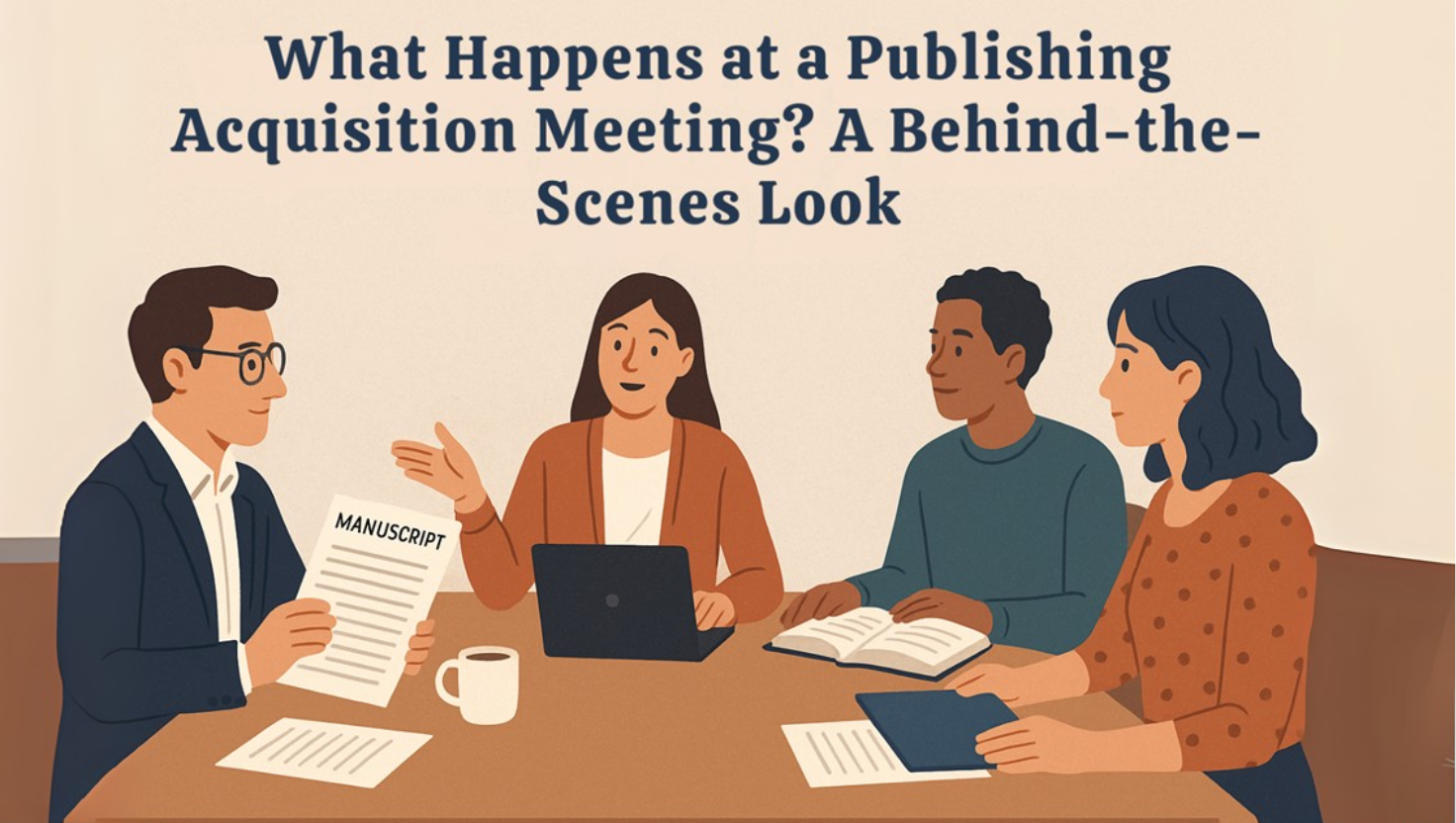
What Happens at a Publishing Acquisition Meeting? A Behind-the-Scenes Look

If you are planning on publishing your very first book and you do not have any idea of what the process looks like when your book is getting published, then this blog is going to help you with a very important aspect of publishing.

The publishing process is not as simple as walking in and getting your book selected because there is a very important step in the process of publishing your book by the name of acquisition.

This is a very special kind of meeting that takes place in traditional publishing, which ultimately determines if your book is going to get published with this particular publisher.

The acquisition meeting is so important that nearly every important person of the publishing house gets involved in the meeting in order to decide the fate of your book.

So what happens at this very special meeting that no author or publisher talks about?

Today, we are going to find out what happens at a publishing acquisition meeting as we have a behind-the-scenes look at a publishing house.

In order to do so, we are going to need to understand what a publishing acquisition meeting is, so let us start with that.

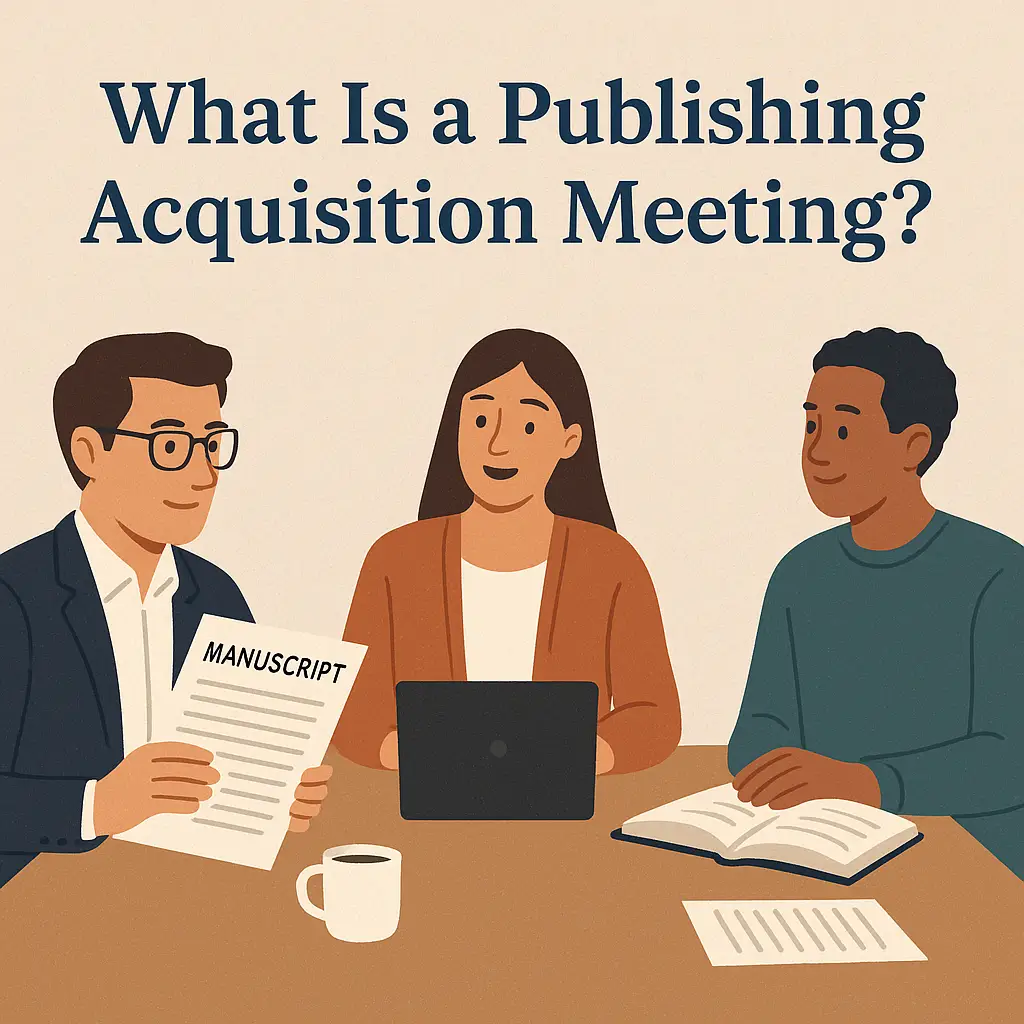
What Is a Publishing Acquisition Meeting?

Publishing Acquisition Meeting

A publishing acquisition meeting or an acquisition meeting, is basically the meeting that determines whether the publishing house is going to publish your book.

This meeting usually consists of many publishing professionals from the publishing house from various departments.

An acquisition meeting is a very formal process where a project in the form of a manuscript is scrutinised from various angles and looked at through different lenses of the publishing house in the form of the editorial lens and the financial and marketing lens, etc.

This kind of meeting usually determines if it is worthwhile for a publishing house to acquire a particular manuscript and whether there is financial incentive to do that.

These kinds of meetings can take place on a regular basis if there is a lot of demand, but this usually happens once or twice a week, with some happening twice or thrice a month if submissions are low.

These people are usually involved in an acquisition meeting:

Acquiring Editor

This is the primary person responsible for championing the manuscript to the other members of the meeting.

Publisher or Editorial Director

This is the final decision maker when it comes to listening to what the editor has to say and discussing everything with the other teams in order to determine the acquisition.

Marketing Team

The marketing team is involved in the meeting as they get to evaluate how the book can be marketed and what kind of marketing channels are going to be utilised and even if it’s marketable and how much.

Sales Team

Similarly, the sales team is involved in the meeting in order to determine the sales potential of the book and which kind of platforms will be willing to sell the book and what the selling strategy will be.

Publicity Team

The publicity team will evaluate publicity techniques for the author and determine if the author is promotable and they will also look at the promotion potential of the book through different media.

Finance Team (in an advisory capacity)

The finance team forms a very important aspect of the meeting as they will lay down the profit and loss projections of the book and make predictions regarding that.

Rights/Foreign Sales Team (if exists)

The rights team will verify and evaluate the rights of the book and determine its processing nationally and internationally.

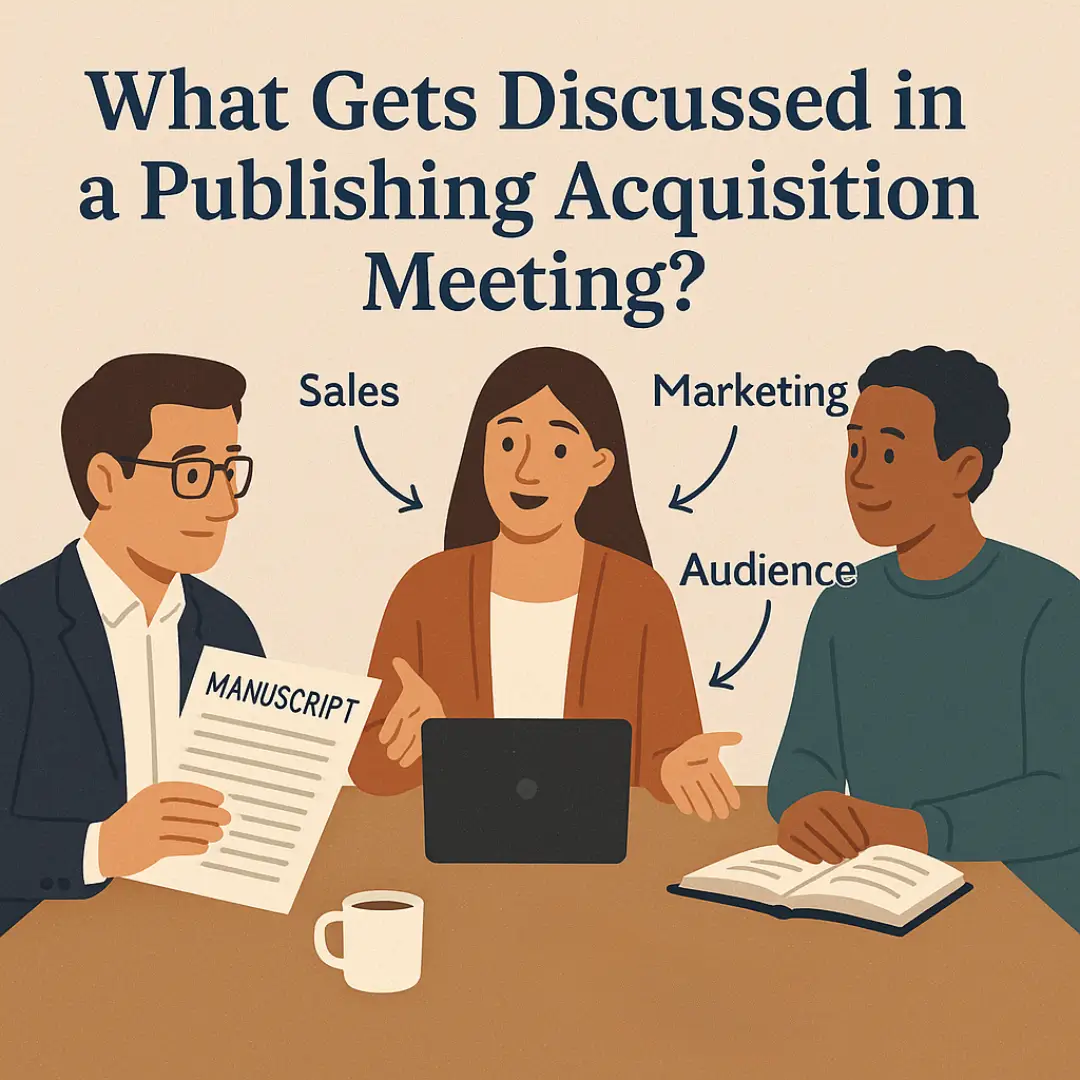
What Gets Discussed in a Publishing Acquisition Meeting?

Publishing Acquisition Meeting

The Pitch by the Editor

The meeting starts with the pitch by the editor and this is the editor responsible for selecting the manuscript from a list of other submissions and presenting it to everyone else in the meeting.

The acquisition editor talks about the synopsis of the book and even talks about the author and details regarding them.

He has to do a lot of research for the meeting and also has to present data for comparable titles through market research and present his case on why this book fits with the publisher’s preference.

The acquisition editor also talks about their vision regarding the positioning of the book and marketing of the book, and ultimately the selling potential of the book.

The P&L Statement

Finance is a very big part of the meeting and profit and loss statements are estimated, which include every financial element, such as advance and royalty costs, as well as production and printing expenses and other expenses such as storage and transportation.

Expected sales volumes are discussed, and all revenue streams are discussed, which include domestic sales and foreign sales and even digital sales.

If the sales numbers look promising, then the discussion moves on to marketing and sales feedback. However, if the numbers do not look nice or acceptable to the publishing house, then the book is rejected.

Marketing & Sales Feedback

The meeting then moves on to marketing and sales, where the marketing and sales teams talk about the target audience of the book and the marketability of the book, along with the retail potential of the book.

The development of the author platform is also discussed and the book market is discussed along with the assessment of comparable title performance, which gives a very good indication of the predicted performance of the book.

This is also when the publicity potential is discussed and how the author can be utilised to publicise the book and the potential for media interviews and much more.

Optics remain a very important topic in these meetings in order to vet the topic of the book and find out if it is controversial or not.

Foreign Rights & Subrights Potential

After all of that is discussed, we finally get to foreign rights and this is usually the case with larger publishing houses that have a presence in multiple countries.

Along with that, a publishing acquisition meeting will also see that discussion of subrights potential in the form of prospects for selling translation rights and also film and TV potential of the book and much more.

If merchandise is to be developed and rights sold, then that is also discussed.

A publishing acquisition meeting is one of the most important stages of publishing when it comes to traditional publishers and this can be a very complicated process where the author simply has no say in the meeting.

This can also be quite a difficult process because there is no opportunity for negotiation or any opportunity for the author to place their own perspectives on their table at that meeting.

If you are someone planning on publishing your own book and you do not really want to go through this complicated process of acquisition meetings without any control and you simply want to sit down with the publishing house and discuss everything up front, then we are here for you.

We are Orange Publishers and we are a legacy publishing company and we are one of the fastest-growing publishing houses in the country.

We are the only publishing house in the industry to offer the convenience of self-publishing with the reliability of traditional publishing all under a single name. That is why there are no closed-door acquisition meetings with us and the author can discuss everything directly and as openly as possible.

We welcome you to visit our website and check out everything we do and we would love to publish your books.


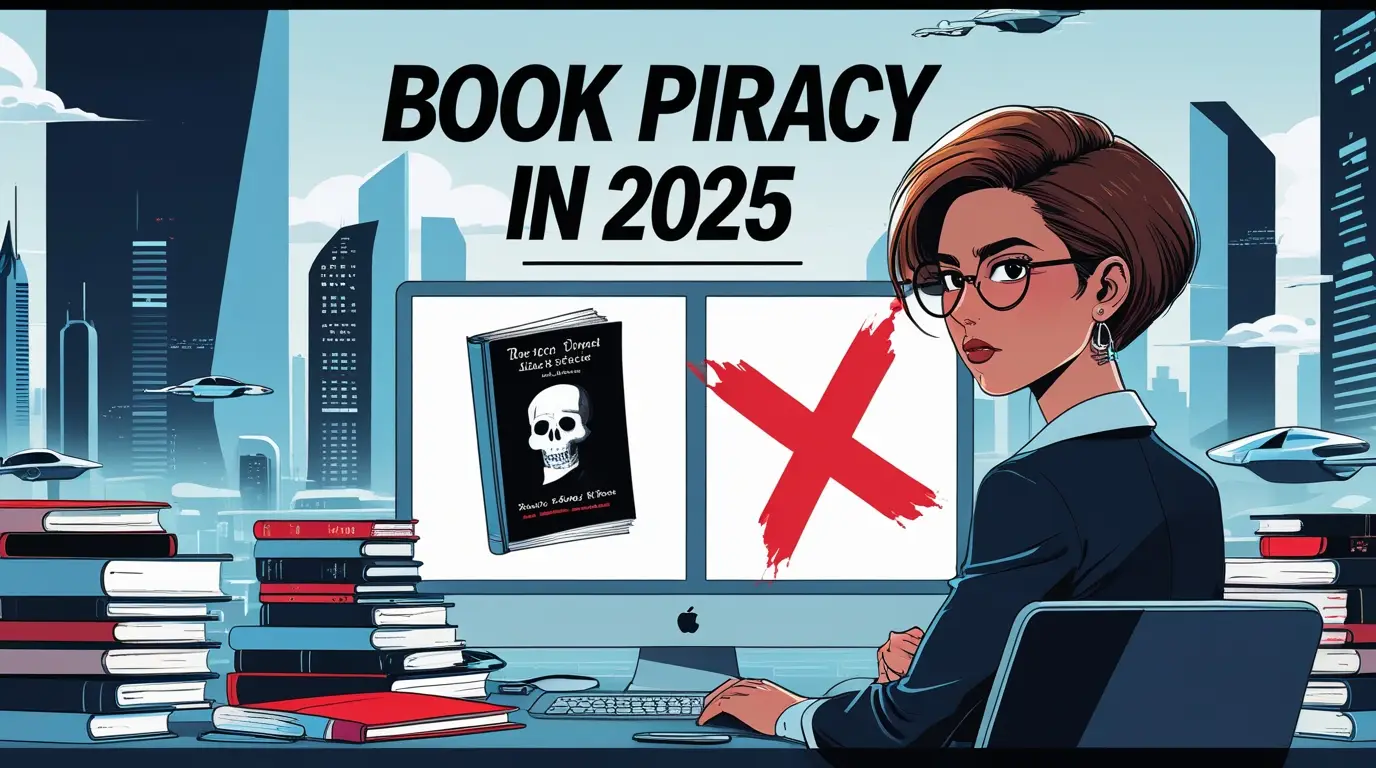
Book Piracy in 2025: How Publishers Are Fighting Back

It’s 2025 and book piracy is supposed to be dead but it is not because the state of book piracy in 2025 is just as active as it was 10 or 20 years ago and perhaps a little bit more.

It is active due to the fact that there are dozens of shadow libraries and piracy websites operating with immunity and no one to check them actively.

The issue becomes much more complicated when you have to understand that these shadow libraries work hand in hand with peer-to-peer networks and torrent websites, which makes controlling book piracy nearly impossible.

But nearly impossible is not impossible and that is exactly what we are going to talk about today, because we will talk about how book publishers are fighting back against book piracy in 2025 and how this should make you feel safe as an author if you are planning on investing in your book.

So, firstly, we are going to look at the situation of book piracy in 2025. We will then move on to how publishers are pushing back.

The State of Book Piracy in 2025

Book Piracy in 2025

The state of book piracy is still very much active in 2025 and here are some of the most popular methods by which books are pirated and distributed illegally across multiple media.

Offline Pirated Book Sales

Offline pirated books can be considered your traditional method of piracy, where the pirate will purchase a single legitimate copy of the book and make photocopies of that or create scans of that book and publish it in cheaper paper.

You can easily identify these books as they are sold on footpaths and can even be seen being sold by vendors at traffic stops and the like. A clear indication of these books is the quality of the paper utilised, as it is usually of the cheapest quality. Controlling this method is the easiest of the bunch because all it takes is identifying the source of the publication.

Shadow Libraries

Next comes shadow libraries in the form of Library Genesis (LibGen) and other names. These are illicit book-sharing platforms usually paired with a private server that holds all the copies of the book.

Since you are looking at EPUB, MOBI, DJVU, AZW3, FB2, CBZ, CBR, RTF, DOC and other formats that usually do not take up a lot of space. This means hosting thousands of books becomes quite easy, even on a single GB of server space.

This kind of piracy is out in the open and that is why it has become relatively easy for publishers to go after these illicit book-sharing platforms and libraries and many have been shut down as well.

Torrent Websites

This is where we get to the challenging aspect of book piracy in 2025; book piracy via torrent sites has been around for at least two decades.

Torrenting is basically peer-to-peer file sharing, which simply means that instead of a central server, every computer that accesses the network becomes a temporary server.

When you have an arrangement like this, pinpointing the source of piracy becomes impossible when your book is being shared by thousands of people with equal levels of accountability.

Social Media Groups

And finally, here is the latest form of piracy, which is not really traceable or even publicly available with just a Google search.

We are talking about book piracy through the sharing of books on private groups on messaging platforms such as Telegram, Kik, WhatsApp and the like.

This is usually done after the DRM from the ebook version of books is cracked and then privately distributed.

How Publishers Are Pushing Back

How Publishers Are Pushing Back

Legal Actions & Domain Takedowns

One of the most effective methods of combating book piracy is with the help of legal action, where publishers come together and file major lawsuits against shadow libraries and platforms that support piracy.

This is, in fact, very common, and you can often hear publishers coming together for something like this, such as educational publishers coming together against LibGen in 2024.

This results in domain takedowns with no other alternative for these shadow libraries to operate from because they are legally prohibited from doing so.

Enforcement via DMCA and Link-Busters

Publishers utilise something called the Digital Millennium Copyright Act of 1998 or something similar, depending on the region, to ask search engines to take down searches and results for pioneer persons of their books and this tends to work wonders when it comes to removing links and content.

This is because in this process, you are not going after the source but you are going after the method of reaching the source, which can often lead to the shutdown of these platforms.

Then there are organisations such as the Link-Busters, a Dutch anti-piracy intermediary, which issues millions and millions of takedown requests to Google and search engines on behalf of the bigger publishing houses.

Technological Tools: AI & Automated Monitoring

The advent of AI has truly been a gift for a publishing house, as they are now able to maintain automated, advanced monitoring systems that track piracy of their publications 24/7.

These AI-powered automatic tools can be utilised to automatically file takedown requests and we are talking about multi-site takedown submissions.

Publishers can utilise these tools with the help of simple dashboards that can help them track piracy across multiple marketplaces all at once.

Aggressive Pricing & Ebooks

Piracy has been around for a lot of years and one of the primary reasons behind piracy has been the cost of books.

Multiple studies have suggested that piracy can be dramatically reduced only if the content is available at an affordable price or at a pricing model that simply does not justify the risk of piracy.

You can see that happening in the music industry as players like Spotify and Apple Music have made music piracy redundant.

We can see just that with the advent of ebooks. The thing with ebooks is that, unlike physical books that have costs associated with them when it comes to publishing and material cost, etc, you can make infinite copies of ebooks at basically 0 cost.

Pair ebooks with aggressive market pricing and now piracy and the risks associated with it, like viruses, etc, just seem too much of a trouble when someone can download an original ebook at affordable pricing.

We hope this blog gives you an idea about the situation of piracy in the book publishing industry and how publishers are actively trying to stop it.

The thing with piracy is that it hurts everyone in the process. It hurts the author because they are not getting their due for their work and the publisher is not getting anything from a pirated book sale in spite of all the work they did with the publishing and marketing and all the investments they made.

Piracy hurts the reader the most because your pirated book distributor cannot ensure you quality of content and sometimes pages are misplaced and content is simply wrong. Other times, pirates will sneak in malware and viruses within the pirated book file, which can do more damage than good.

If you are someone who is willing to publish your very first book and you are concerned about privacy and looking for a publisher that takes book piracy very seriously, including active steps to prevent it, then we are here for you.

We are Orange Publishers and we are one of the fastest-growing and most popular book publishing companies in India that brings you the reliability of traditional publishing with the convenience of self-publishing all under a single roof.

We welcome you to visit our website and check out everything we do and we would love to publish your books for you.

How to Structure Your Novel Before You Write It: A Step-by-Step Guide

Writing a novel is probably one of the most thrilling creative endeavours you can embark on because it is not just a process but an actual journey which can be filled with happiness and frustration, and satisfaction.

The reason why it is often called a journey is simply because it is usually 300 pages long, with most novels being bigger than that. This means you simply cannot start and finish writing in novel in a single day or in a single week. Sometimes novels take years to finish, and perhaps in construction terms, it might be the same as creating the Taj Mahal because of its sheer scale and complexity.

So, if you are planning on writing your very first novel, where do you begin?

We are going to help you with that exactly, as this is going to be a guide that will solve one of the most difficult aspects of writing a novel, its structure.

This is going to be a step-by-step guide on how you can structure your novel and this will help you out if you are doing this for the first time.

But before we get on with the guide, we need to understand why novel structure matters so much and then we can move on with the guide.

Why Novel Structure Matters

Novel Structure

The structure of a novel matters simply because it is the basic framework, or rather the basic skeleton of your story and when you have that structure in place, it will help you with multiple things.

With a strong structure, you can organise your ideas while which is definitely going to help you out while you write the actual novel.

Since there are so many ideas that you will have to introduce in the novel, having a structure like this will also help you maintain consistent pacing throughout the novel.

Along with that, you can also build better tension and emotional payoff with a good structure and ensure that your novel does not have any bits that are slow or saggy per se.

Ultimately, a good structure will help you finish what you started because starting a novel is easy but continuing it and pushing on and finishing it is the hard part. Statistically, there are probably more unfinished novels in the world than finished ones.

Step-by-Step Novel Guide

Novel Guide

Step 1: Start With the Idea

The very first thing you need to do, even before you begin with the structure, is to sort out a few things.

The very first thing you need to do is to find out and finalise what the story is about, along with the central theme of the story and even the central conflict of the story. Doing this will make the structure much stronger.

After you figure out the central theme, you need to ascertain the main character of the story or the main characters. You need to then finalise what this main character is going to do.

The third step of this process is to find out what stands in the way of this primary character, which will ultimately create this story.

A simple way to do this is to make sure that if you are able to boil down the entire story into a single sentence or two sentences, then you know you have done this correctly.

Step 2: Choose The Structural Framework

There are different structural frameworks to choose from because you can go very traditional and do a Three-Act Structure, with the first act usually introducing characters and the second act being about confrontation and the third act being of resolution.

Or you can try out something different, such as a structure with more acts, or you can even try out a different structure in the form of The Hero’s Journey and this is actually quite a popular structure, especially in fantasy.

Step 3: Map Out Your Key Plot Points

After you have chosen the structure, now it is time to map out all the important plot points and you can break it down into plot point number 1 and 2 and progress it like that.

The first plot point is usually what starts the story and kicks things off. The second plot point is usually a point of no return where the primary character does not really have the means to put things back into normal without a major turning point or event.

This major training point is usually also called the midpoint of the story, which is then followed by one or two plot points, followed by the climax. The climax usually results in the resolution.

The series usually goes like this:

Inciting Incident> Plot Point 1> Midpoint> Plot Point 2> Climax> Resolution

Step 4: Flesh Out Character Arcs

Now, it is finally the time to create the character arcs and in order to do it you can ask a few questions, and the answers will determine the character arcs.

Since every character has to grow, you need to ask yourself about how the primary character’s experiences change, and then you should ask yourself about the kind of problem they must overcome and finally, what kind of journey does this lead the character on and how it shapes the plot.

If you ask these questions, then the answers are going to help you find out the character arcs.  Do it for all the characters, and you are now even closer to a strong structure.

Step 5: Create a Scene List or Outline

Now it is time to connect the different plot points with scenes because these points cannot exist on their own, and you need to find out what happens in each scene and how all the characters are involved in these scenes.

In order to do this, you can try out different tools such as index cards, both physical and digital, and you can also utilise the snowflake method, where you simply begin from a simple point and then expand like a snowflake from that single point.

You can also try out chapter-by-chapter summaries in order to create a scene list.

Step 6: World Building, Subplots and Supporting Characters

A single primary character will not be enough for a story, and that is why you need subplots, and you need to outline them and how these subplots will get involved with the primary plot.

Along with that, you need to plan out a little bit more for the secondary characters and their arcs.

Additionally, you should also plan out the fact of how these subcharacters mix with the primary character and how their plots intertwine with each other without overshadowing the primary plot.

You will also need to build your world and timeline, and make sure these plots go with that timeline of events, and you can even sketch out maps and also write character back stories and put the whole thing together.

This is basically how you create a structure for your novel, and in addition to that you must also think about some other important things such as whether you are putting in something interesting in each chapter and how each chapter is actually necessary for the story and you must also think about the pacing of the story.

When you are doing all that, you must ultimately identify what message you want to portray with the story and what the primary idea behind the story is.

If you do all that, then you will have yourself a launchpad that is your structure, which will help you to start writing.

And if you are someone well on your way to writing the story and you have completed writing the manuscript for the novel and are looking for a reputable publisher to publish with, we are here for you.

We are Orange Publishers and we are one of the most reputable names in the industry when it comes to publishing in India. We present you with the convenience of self-publishing paired with the reliability of traditional publishing, all under a single roof and name.

We have extensive experience in publishing novels and we would love to help you publish your first novel. We welcome you to visit our website and check out everything we do.